While reading this article I thought of the climax of the movie 13 Going on 30: the main character has a presentation of her idea for the revamp of the fashion magazine she works at; her rival uses images projected on a screen with music accompaniment whereas she has pictures cut out of other magazines pasted onto foam board. This scene is a perfect example of how presentations have changed because of PowerPoint.
Now, I love PowerPoint as much as the next college student, but this article helped me think about why I love it and how it really isn't always the best choice for a speech or presentation. I took communication my freshman year at Kennesaw State, and we had to give a speech. We could chose any topic we wanted to speak about and were encouraged to use PowerPoint, however, we were not allowed to read straight off the slides (because "no one likes to be read to after fourth grade"), and had to include at least one image per slide, and up to three. I think these are the best instructions I have ever gotten for PowerPoint including when I learned how to use it in 5th grade! I try to not include text as much as possible on my presentations now because I find that it makes for an overall better effect.
Have you gotten any good advice on presentations? I'd really like to hear it!
My favorite thing said in this article is "I think that we as a people have become unaccustomed to having conversations with each other, where we actually give and take to arrive at a new answer." I think this quotation is amazing! It might not have been in the articles we have read on digital media, but it is definitely something everyone should think about. I know that I am incredibly bad about speaking to people, and sometimes get nervous when I have to talk to someone on the phone; if I have to say something bad, I prefer to text or email because I want that extra time it takes the person to respond to cool down and really think about what they are going to say.
Wednesday, November 18, 2009

Monday, November 2, 2009
Introduction
The introduction touched on a lot of different topics that may be chosen for the documented essay. I'm not an expert on book formatting, but I think this would have been better as an afterward. The author of this section write as though the play has already been read or seen by the reader, and that kind of information should probably be placed after the work. I also think it was also a little long for an introduction.
My favorite part was about the colonization. I like the pictures used (except the one on page 35-yuck!) because I think everything is better with pictures. Information on "The New World" is always fascinating to me. Just thinking about setting out on a ship and finding a new, uncharted stretch of land with new people that know nothing of the outside world is amazing. It sometimes makes me think of the old Burger King commercial about "Whopper Virgins".
I think the cultural influences on the play make it into a time capsule of the time is was written. The fact that it is a play, and is almost completely dialogue is really amazing. The characters become the narrators, and their words are what create the images of the island. The best part is that, for the most part, it goes unnoticed. Even though this is not how anyone speaks to one another, it still manages to sound realistic. Top Notch!
My favorite part was about the colonization. I like the pictures used (except the one on page 35-yuck!) because I think everything is better with pictures. Information on "The New World" is always fascinating to me. Just thinking about setting out on a ship and finding a new, uncharted stretch of land with new people that know nothing of the outside world is amazing. It sometimes makes me think of the old Burger King commercial about "Whopper Virgins".
I think the cultural influences on the play make it into a time capsule of the time is was written. The fact that it is a play, and is almost completely dialogue is really amazing. The characters become the narrators, and their words are what create the images of the island. The best part is that, for the most part, it goes unnoticed. Even though this is not how anyone speaks to one another, it still manages to sound realistic. Top Notch!
Monday, October 26, 2009
Allons-y Alonso!
I'm having a little trouble understanding if Prospero has his own powers, or if it is only Ariel that makes the magic happen. Is anyone else clear on that? I might have misunderstood a line somewhere that told us if Prospero has magic. It seems like he only uses his words to control everyone and that seems to do the job. Caliban says in act 3.2 on line 51 that Prospero got the island with sorcery, but it could have been Ariel's and nothing of his own. Maybe I am just trying to make Prospero less powerful in my mind.
I love love-at-first-sight stories! (I wish my boyfriend were happy to serve me, and it wouldn't hurt if he were heir to the throne.) Although Miranda is innocent, she seems to have genuinely found her true love. It is strange that one of the men her father had stranded on the island is the man made for his daughter. He probably hoped all along that she would marry into such a high place of power. Do you guys think he is happy for her because she is happy, or because Ferdinand is the king's son?
I really like that Caliban has mostly stopped his cursing to tell the comic relief about the island. I would say that the island is Caliban's love since he does not have a woman of his kind. The image I think of when I imagine Caliban is that of Harry Potter in the Goblet Of Fire. He eats the gillyweed that he got from Dobby (who stole it from Snape's dungeon/office after hearing of it from Professor Moody who is really Barty Crouch Jr. in magical disguise trying to get Potter killed!) and grows gills and webbed fingers and toes. He's not so much a monster as just a weird looking dude. Maybe Stephano and Trinculo are just too drunk to reason out whether Caliban is a fish or man. Unfortunately, I think the plot to kill Prospero becomes a joke instead of understanding that Caliban is very unhappy. Did you guys feel the same?
I love love-at-first-sight stories! (I wish my boyfriend were happy to serve me, and it wouldn't hurt if he were heir to the throne.) Although Miranda is innocent, she seems to have genuinely found her true love. It is strange that one of the men her father had stranded on the island is the man made for his daughter. He probably hoped all along that she would marry into such a high place of power. Do you guys think he is happy for her because she is happy, or because Ferdinand is the king's son?
I really like that Caliban has mostly stopped his cursing to tell the comic relief about the island. I would say that the island is Caliban's love since he does not have a woman of his kind. The image I think of when I imagine Caliban is that of Harry Potter in the Goblet Of Fire. He eats the gillyweed that he got from Dobby (who stole it from Snape's dungeon/office after hearing of it from Professor Moody who is really Barty Crouch Jr. in magical disguise trying to get Potter killed!) and grows gills and webbed fingers and toes. He's not so much a monster as just a weird looking dude. Maybe Stephano and Trinculo are just too drunk to reason out whether Caliban is a fish or man. Unfortunately, I think the plot to kill Prospero becomes a joke instead of understanding that Caliban is very unhappy. Did you guys feel the same?
Monday, October 12, 2009
Politics and the English Language
Wow! This is a serious rant!
I was a little confused at first, but I soon understood what Orwell was trying to convey. I disagree with his paragraph on pretentious diction, because many of those words have a history behind them that creates an image when reading. They are words journalists use to seem more credible or to change the reader's mind. I almost bought his spiel until I read the sentence that he bashed the use of foreign phrases. Deus ex machina is a very important literary term! Translated literally, it means "god of the machine". That just does not have the same ring to it as DEUS EX MACHINA! I think that the author had a personal problem with these phrases simply because it was a time of war when he wrote it. Everyone was very patriotic in the mid-forties, and I think it was simply his love of his own country that made him think these foreign phrases had no use in the English language. What erks me the most is that after the break, he says that translating terms is no good either. I can't believe this guy! Did this bother anyone else?
Orwell makes an example by modernizing a passage from Ecclesiastes, and says that modern writing is progressively failing which seems to be the main point of the essay. He says "this kind of writing is not yet universal." I think that no type of writing will ever be universal because there are so many more people that can read and write now than there were when Ecclesiastes was written in 250 BCE.
Random side note: He uses the word "humbug" in his longest paragraph. I wanted to use it at the end of my first paragraph, but I decided it might make you think of A Christmas Carrol, not "nonsense".
I like the section on political writing because it is the truest ideas Orwell has in this essay. To bring someone to your side of thinking, you have to use the right words to appeal to their ideals. I cannot remember if we mentioned it in this class, but we spoke of how journalists uses specific words to create a certain view which can sway the reader to believe things that may or may not be true.
It's really cool how we can use our words.
I was a little confused at first, but I soon understood what Orwell was trying to convey. I disagree with his paragraph on pretentious diction, because many of those words have a history behind them that creates an image when reading. They are words journalists use to seem more credible or to change the reader's mind. I almost bought his spiel until I read the sentence that he bashed the use of foreign phrases. Deus ex machina is a very important literary term! Translated literally, it means "god of the machine". That just does not have the same ring to it as DEUS EX MACHINA! I think that the author had a personal problem with these phrases simply because it was a time of war when he wrote it. Everyone was very patriotic in the mid-forties, and I think it was simply his love of his own country that made him think these foreign phrases had no use in the English language. What erks me the most is that after the break, he says that translating terms is no good either. I can't believe this guy! Did this bother anyone else?
Orwell makes an example by modernizing a passage from Ecclesiastes, and says that modern writing is progressively failing which seems to be the main point of the essay. He says "this kind of writing is not yet universal." I think that no type of writing will ever be universal because there are so many more people that can read and write now than there were when Ecclesiastes was written in 250 BCE.
Random side note: He uses the word "humbug" in his longest paragraph. I wanted to use it at the end of my first paragraph, but I decided it might make you think of A Christmas Carrol, not "nonsense".
I like the section on political writing because it is the truest ideas Orwell has in this essay. To bring someone to your side of thinking, you have to use the right words to appeal to their ideals. I cannot remember if we mentioned it in this class, but we spoke of how journalists uses specific words to create a certain view which can sway the reader to believe things that may or may not be true.
It's really cool how we can use our words.
Tuesday, October 6, 2009
To His Coy Mistress
I have never been very good at understanding poetry beyond what the words say, and I can tell there is something more being said with this poem. In the first stanza, he is talking about how he is infatuated with a woman, and he believes he will never stop feeling this way. He talks of how much time he would spend to know different parts of her body. In the second stanza he talks about how time is always against us and that his lady will die soon. In this section he says, "My echoing song: then worms shall try/That long preserved virginity," which makes me think that he has never slept with this woman. If he has never slept with her, why is she his mistress? I thought mistresses were to please men who didn't care to do so with their wives. Lovers. Am I wrong? Is he saying something else here? The third stanza makes it seem as though the first two were written to convince her to sleep with him. He says that they should "sport" while they are still young, and make time slow down.
It's a very strange poem. The unfamiliar style of it makes me think of Lewis Carrol's The Jabberwocky. Even though Marvell doesn't make up words, it seems as though he makes up his own idea of a sentence. I hope I learn more about what is going on in this poem tomorrow during the discussion.
It's a very strange poem. The unfamiliar style of it makes me think of Lewis Carrol's The Jabberwocky. Even though Marvell doesn't make up words, it seems as though he makes up his own idea of a sentence. I hope I learn more about what is going on in this poem tomorrow during the discussion.
Wednesday, September 23, 2009
psychoanalytic criticism
I love this stuff! It's so interesting! We have been talking about Freud recently in my Literary Genre class with Dr. Rice, and I'm really glad I got to learn more about his theories. The information I liked the most was about repressed thoughts coming out in dreams, literature, and Freudian slips. I like the idea that we write about characters that may be one of our multiple (repressed) personalities. Amazing!
When reading Frankenstein, I didn't notice the oedipal feelings Victor had. For some reason I have trouble seeing the oedipal thing unless it is blatantly obvious. I suppose you could say it was obvious when Victor dreamed of his Elizabeth turning into his dead, rotting mother, but when reading it, I thought it was a strange dream and probably had something to do with the disgusting creature he just created. I thought it was because he had thought he chose the most beautiful pieces to create it, but it turned out to be hideous. I thought that was just a reflection of it. Did any of you think it was oedipal when you first read it, or did you think it was just a weird dream?
I'm glad there is mention of Victor approving of his creature just before it opens it's eyes on page 285. (I think maybe Victor could have done a better job if he hadn't been so cocky that he could create a human. Just a little more time picking out larger pieces of flesh, and the creature would have looked a lot better, I think.)
When reading Frankenstein, I didn't notice the oedipal feelings Victor had. For some reason I have trouble seeing the oedipal thing unless it is blatantly obvious. I suppose you could say it was obvious when Victor dreamed of his Elizabeth turning into his dead, rotting mother, but when reading it, I thought it was a strange dream and probably had something to do with the disgusting creature he just created. I thought it was because he had thought he chose the most beautiful pieces to create it, but it turned out to be hideous. I thought that was just a reflection of it. Did any of you think it was oedipal when you first read it, or did you think it was just a weird dream?
I'm glad there is mention of Victor approving of his creature just before it opens it's eyes on page 285. (I think maybe Victor could have done a better job if he hadn't been so cocky that he could create a human. Just a little more time picking out larger pieces of flesh, and the creature would have looked a lot better, I think.)
Tuesday, September 22, 2009
No Class--Feminist Criticism Post
I want to start by saying that 'criticism' has, at the same time, too many vowels and too many consonants. I could probably win Hangman with that one.
Smith writes that, as children, we create spheres to separate things into. This was confusing at times, but she consistently wrote of how it was connected with masculinity and femininity. On page 313 she writes about what we all think of when we hear 'feminism': the woman stays at home to cook, clean, and take care of the kids while the man goes out and works hard to bring home the bacon. Smith writes, "the man's public sphere of commerce and activity was kept distinct from the woman's private sphere of home and passivity," (313). She goes on to write about different traits that show masculinity and femininity. Examples of these traits can be found in Frankenstein. Victor was our only masculine male character because the others showed a more nurturing and loving side, and the women characters were portrayed as very domestic and caring. I think that if Victor had been a little bit more feminine, he wouldn't have run from the creature when he saw it. Victor's father wasn't very masculine when raising his son, and I believe this may have something to do with why he ran instead of taking charge.
Smith gives the example that Mary Shelley stayed in the private sphere when publishing Frankenstein anonymously in 1818. At that time she allowed her husband to do the editing which is another example of the public/private sphere.
When reading this, I thought of the creature. He spends most of his time in hiding wishing he wasn't alone. He wants family, and he wants to be loved. Do you think the creature is more masculine or more feminine? Since he is a creation of Victor's and isn't human, is he exempt from these particular spheres?
Smith writes that, as children, we create spheres to separate things into. This was confusing at times, but she consistently wrote of how it was connected with masculinity and femininity. On page 313 she writes about what we all think of when we hear 'feminism': the woman stays at home to cook, clean, and take care of the kids while the man goes out and works hard to bring home the bacon. Smith writes, "the man's public sphere of commerce and activity was kept distinct from the woman's private sphere of home and passivity," (313). She goes on to write about different traits that show masculinity and femininity. Examples of these traits can be found in Frankenstein. Victor was our only masculine male character because the others showed a more nurturing and loving side, and the women characters were portrayed as very domestic and caring. I think that if Victor had been a little bit more feminine, he wouldn't have run from the creature when he saw it. Victor's father wasn't very masculine when raising his son, and I believe this may have something to do with why he ran instead of taking charge.
Smith gives the example that Mary Shelley stayed in the private sphere when publishing Frankenstein anonymously in 1818. At that time she allowed her husband to do the editing which is another example of the public/private sphere.
When reading this, I thought of the creature. He spends most of his time in hiding wishing he wasn't alone. He wants family, and he wants to be loved. Do you think the creature is more masculine or more feminine? Since he is a creation of Victor's and isn't human, is he exempt from these particular spheres?
Wednesday, September 16, 2009
Contextual Documents
The editor's note at the beginning of today's reading reminded me of the quotation "there are no new stories. Only new ways of telling them" (Clive Barker) because it seems as though Mary Shelly's novel is pieced together from existing thoughts and ideas from other works. I suppose you could say her novel is much like the monster that lives inside it: using the choicest pieces to create a horror.
I think the stories in the contextual documents sound sort of like scripture which makes them difficult to read. The second story we read seemed like it had no point. It was a small narrative on how terrible this young man's life was. Were we even told his name? (I just want to pause to mention that in this paragraph I have already used words associated with talking and not reading and writing like Manguel had written about in the reading out loud section.) And the next story talked of matrices so much, that I couldn't get the movie out of my head long enough to pay attention to what else what being said. Did anyone else have that problem? I even started to hear Laurence Fishburne (the actor that portrays Morpheus) narrate on page 202. I immediately tried to not hear him, but it just switched to James Earl Jones! I am glad we did not get such a deep discussion in The Lion King as we do in Paracelsus.
I think the reason I found this reading fairly boring is because it was written in a dialect that I just cannot relate to. No one talks this way anymore unless they are quoting some old written text. Shelley's writing was much easier to read and more enjoyable. I also found it difficult to find something to talk about in length. Do you agree?
I think the stories in the contextual documents sound sort of like scripture which makes them difficult to read. The second story we read seemed like it had no point. It was a small narrative on how terrible this young man's life was. Were we even told his name? (I just want to pause to mention that in this paragraph I have already used words associated with talking and not reading and writing like Manguel had written about in the reading out loud section.) And the next story talked of matrices so much, that I couldn't get the movie out of my head long enough to pay attention to what else what being said. Did anyone else have that problem? I even started to hear Laurence Fishburne (the actor that portrays Morpheus) narrate on page 202. I immediately tried to not hear him, but it just switched to James Earl Jones! I am glad we did not get such a deep discussion in The Lion King as we do in Paracelsus.
I think the reason I found this reading fairly boring is because it was written in a dialect that I just cannot relate to. No one talks this way anymore unless they are quoting some old written text. Shelley's writing was much easier to read and more enjoyable. I also found it difficult to find something to talk about in length. Do you agree?
Wednesday, September 9, 2009
Frankenstein, pages 3- 90
I really like the end of chapter 2 on pages 48 and 49. The author's writing style really brings out the emotions of the narrator. In the first paragraph on page 48, she uses a lot of large words to convey the confusion and frustration the narrator is going through with his failed experiments.
The author then moves on to convey the awe the narrator has in seeing a tree destroyed by lightning. This sense of awe moves smoothly into the short passage about his guardian angel sending him ideas. However, the last sentence of chapter 2 is very dark and Gothic, changing moods dramatically: “It was a strong effort of the spirit of good; but it was ineffectual. Destiny was too potent, and her immutable laws had decreed my utter and terrible destruction.” This sentence just screams 'Gothic novel!' I just can’t wait to find out what terrible path Destiny has chosen for our main character. I like the personification of destiny, also.
I've noticed that the author is very good at conveying feelings. In most of the modern books I've read, it's written simply: "I was so pissed at ...... because ..... ," but Mary Shelley takes a different approach. Did you notice that she didn't state feelings, but created them with her writing? It almost has the feel of poetry. Do you agree?
I changed my settings so there is a pop-up for comments. I thought this would be easier than the other way I had it, so you can see my post and comment. I'm sorry the box won't show up under my posts! I can't figure it out! Please let me know if this way is worse. Thanks!
"...and if my incantations were always unsuccessful, I attributed the failure rather to my own inexperience and mistake, than to a want of skill or fidelity in my instructors. An thus for a time I was occupied by exploded systems, mingling, like and unadept, a thousand contradictory theories, and floundering desperately in a very slough of multifarious knowledge, guided by an ardent imagination and childish reasoning, till an accident again changed the current of my ideas."I'm not sure if these words were more common when the novel was published, but it was tough for me to read.
The author then moves on to convey the awe the narrator has in seeing a tree destroyed by lightning. This sense of awe moves smoothly into the short passage about his guardian angel sending him ideas. However, the last sentence of chapter 2 is very dark and Gothic, changing moods dramatically: “It was a strong effort of the spirit of good; but it was ineffectual. Destiny was too potent, and her immutable laws had decreed my utter and terrible destruction.” This sentence just screams 'Gothic novel!' I just can’t wait to find out what terrible path Destiny has chosen for our main character. I like the personification of destiny, also.
I've noticed that the author is very good at conveying feelings. In most of the modern books I've read, it's written simply: "I was so pissed at ...... because ..... ," but Mary Shelley takes a different approach. Did you notice that she didn't state feelings, but created them with her writing? It almost has the feel of poetry. Do you agree?
I changed my settings so there is a pop-up for comments. I thought this would be easier than the other way I had it, so you can see my post and comment. I'm sorry the box won't show up under my posts! I can't figure it out! Please let me know if this way is worse. Thanks!
Wednesday, September 2, 2009
A History of Reading, pages 225 - 319
READING WITHIN WALLS
pp 227 - I like the quote from Saint Teresa: "I became accustomed to reading them, and that small fault made me cool my desire and will to do my other tasks. And I thought nothing of spending many hours a day and night in this vain exercise, hidden from my father. My rapture in this was so great that, unless I had a new book to read, it seemed to me that I could not be happy." I am just like this! I am constantly reading instead of doing what I should be doing, and I am always buying new books.
pp 230 - Manguel writes of Japanese court women "At court, the women's days were spent mostly "gazing into space" in an agony of leisure." This quote makes me think of my sister in her dorm at West Georgia. She often sends me the same text: "im bored." I cannot imagine how terrible it would be to sit in a room filled with pretty things and do nothing all day. My sister would probably go mad.
STEALING BOOKS
pp 241 - "According to the 17th century gossipmonger Tallemant des Réaux, stealing books is not a crime unless the books are sold." Oh, how I wish this was true now. I think it sounds ridiculous, though. I love the story of Libri stealing and selling books, though. I imagine him to be a dashing gentleman with a lot of charm. He would have to be to steal all those books!
pp 243 - "Bibliokleptomania" Oh, Manguel! You slay me! Next time a friend borrows one of my books and takes too long to return it, I will call her a bibliokleptomaniac! I cannot wait!
THE AUTHOR AS READER
When reading this chapter, I continued to think of how I always read a paper out loud before I print the final copy to hear my mistakes. I learned this in ENGL 1101, and I wish I had learned this trick in high school. Reading out loud helps me find not only grammatical errors and typos, but it also helps me hear how pointless some sentences are. I've never read in public, but from what this chapter says, it would probably help me find "weak places" (pp 255) and have reader feedback.
I don't know why, but I also thought of how there are extra pages at the end of books because of the printing process. They print a certain number of pages per sheet of paper, and at the end, there are some blanks. I thought of this while reading this chapter, so I flipped to the back to see how many leftovers Manguel had, and, lo! There is a cool timeline in the back! I'm surprised the previous owner of this book hadn't ripped it out! This gave me ideas for my narrative. I only hope I can fit them in!
THE TRANSLATOR AS READER
I like the barbershop story on 263. It's funny and endearing. I can't understand why they wouldn't call the hotel. Did they treat him that way because of his accent? Because he wasn't one of them?
pp 265 - Labé writes, "but when we happen to put our thoughts in writing, how easily, later on, does our mind race through an infinity of events, incessantly alive, so that when a long time afterwards we take up those written pages we can return to the same place and to the same disposition in which we once found ourselves." I love this quote because it is so very true that we can remember so much detail from things written down. Writing down certain thoughts or events is almost better than a picture. When looking at a photo taken two years ago, you remember the place and the people in it and what you were doing, but in a journal about the same event, you have recorded your feelings and details that you would have forgotten otherwise. Do you agree with this?
I am so glad Manguel included the Bible in this chapter. Even in church, someone is still translating the scripture and helping us to understand what is being said. I think that many things were lost in the original translation from Hebrew into German, and we can probably never change that now because of such strong beliefs in the book we have today. I would love to be able to read and understand one of the earliest Bibles.
FORBIDDEN READING
pp 285 - Manguel writes about this ridiculous man Anthony Comstock who not only has an unfortunately funny last name, but he is, in fact, ignorant. You would think that grumpy old men had better things to do than arrest shopkeepers for selling the wrong kind of books in 1868. Maybe he could have spent his time more wisely going for a drive in the park to be seen where he would not be "lead astray and corrupted by disease." With all this running around destroying things, he probably had no time to read. I bet he would try to destroy or ban my blog if I put the word HEINY in it.
THE BOOK FOOL
pp 301 - Manguel writes, "it is curious that glasses have never lost this unworldly association. Even those who wish to appear wise (or at least bookish) in our time take advantage of the symbol; a pair of glasses, whether prescription or not, undermines the sensuality of a face and suggests instead intellectual preoccupations." This reminded me of an episode of Boy Meets World where Eric is trying to look smart. One of the key things is to put on a pair of glasses while thinking. He managed to look smarter! Do you think glasses make someone look smarter or "bookish"?
ENDPAPER PAGES
Did you feel this last part was a little strange? It's like he wanted to wait until there was more history of reading to write about.
pp 227 - I like the quote from Saint Teresa: "I became accustomed to reading them, and that small fault made me cool my desire and will to do my other tasks. And I thought nothing of spending many hours a day and night in this vain exercise, hidden from my father. My rapture in this was so great that, unless I had a new book to read, it seemed to me that I could not be happy." I am just like this! I am constantly reading instead of doing what I should be doing, and I am always buying new books.
pp 230 - Manguel writes of Japanese court women "At court, the women's days were spent mostly "gazing into space" in an agony of leisure." This quote makes me think of my sister in her dorm at West Georgia. She often sends me the same text: "im bored." I cannot imagine how terrible it would be to sit in a room filled with pretty things and do nothing all day. My sister would probably go mad.
STEALING BOOKS
pp 241 - "According to the 17th century gossipmonger Tallemant des Réaux, stealing books is not a crime unless the books are sold." Oh, how I wish this was true now. I think it sounds ridiculous, though. I love the story of Libri stealing and selling books, though. I imagine him to be a dashing gentleman with a lot of charm. He would have to be to steal all those books!
pp 243 - "Bibliokleptomania" Oh, Manguel! You slay me! Next time a friend borrows one of my books and takes too long to return it, I will call her a bibliokleptomaniac! I cannot wait!
THE AUTHOR AS READER
When reading this chapter, I continued to think of how I always read a paper out loud before I print the final copy to hear my mistakes. I learned this in ENGL 1101, and I wish I had learned this trick in high school. Reading out loud helps me find not only grammatical errors and typos, but it also helps me hear how pointless some sentences are. I've never read in public, but from what this chapter says, it would probably help me find "weak places" (pp 255) and have reader feedback.
I don't know why, but I also thought of how there are extra pages at the end of books because of the printing process. They print a certain number of pages per sheet of paper, and at the end, there are some blanks. I thought of this while reading this chapter, so I flipped to the back to see how many leftovers Manguel had, and, lo! There is a cool timeline in the back! I'm surprised the previous owner of this book hadn't ripped it out! This gave me ideas for my narrative. I only hope I can fit them in!
THE TRANSLATOR AS READER
I like the barbershop story on 263. It's funny and endearing. I can't understand why they wouldn't call the hotel. Did they treat him that way because of his accent? Because he wasn't one of them?
pp 265 - Labé writes, "but when we happen to put our thoughts in writing, how easily, later on, does our mind race through an infinity of events, incessantly alive, so that when a long time afterwards we take up those written pages we can return to the same place and to the same disposition in which we once found ourselves." I love this quote because it is so very true that we can remember so much detail from things written down. Writing down certain thoughts or events is almost better than a picture. When looking at a photo taken two years ago, you remember the place and the people in it and what you were doing, but in a journal about the same event, you have recorded your feelings and details that you would have forgotten otherwise. Do you agree with this?
I am so glad Manguel included the Bible in this chapter. Even in church, someone is still translating the scripture and helping us to understand what is being said. I think that many things were lost in the original translation from Hebrew into German, and we can probably never change that now because of such strong beliefs in the book we have today. I would love to be able to read and understand one of the earliest Bibles.
FORBIDDEN READING
pp 285 - Manguel writes about this ridiculous man Anthony Comstock who not only has an unfortunately funny last name, but he is, in fact, ignorant. You would think that grumpy old men had better things to do than arrest shopkeepers for selling the wrong kind of books in 1868. Maybe he could have spent his time more wisely going for a drive in the park to be seen where he would not be "lead astray and corrupted by disease." With all this running around destroying things, he probably had no time to read. I bet he would try to destroy or ban my blog if I put the word HEINY in it.
THE BOOK FOOL
pp 301 - Manguel writes, "it is curious that glasses have never lost this unworldly association. Even those who wish to appear wise (or at least bookish) in our time take advantage of the symbol; a pair of glasses, whether prescription or not, undermines the sensuality of a face and suggests instead intellectual preoccupations." This reminded me of an episode of Boy Meets World where Eric is trying to look smart. One of the key things is to put on a pair of glasses while thinking. He managed to look smarter! Do you think glasses make someone look smarter or "bookish"?
ENDPAPER PAGES
Did you feel this last part was a little strange? It's like he wanted to wait until there was more history of reading to write about.
Wednesday, August 26, 2009
A History of Reading, pages 3-123
THE LAST PAGE
I like the images created by the author on pages 3-5 of the readers from these pictures, paintings, and statues, but I feel it is a little long-winded for him to merely say he is not alone. I feel what he means by this statement is only that he is not alone in his love of reading.
On page six, Manguel writes "we always think that we are alone in each discovery, and that every experience, from death to birth, is terrifyingly unique," and I never really thought of that. I have eureka moments every now and then, but I never thought about how vain I was in thinking those thoughts were mine first, and alone, and how everyone would be impressed in my clever thoughts.
Page 11 "I took to trailing far behind them, murmuring, 'Hear, hear.'" I find myself feeling this way with some of the things Manguel writes, but not knowing how to blog about it.
Just below the quote on page twelve, he uses the word fantastical. I did not know that was a real word! I thought it was just a commonly used made-up word. I like how he uses it to describe how he believed everything in his books was real.
READING SHADOWS
Whoa! Page 35: I would have never thought that people who were left-handed were left-handed because they used the other side of their brain to think! I wonder if those people have different thought patterns because of this.
THE SILENT READERS
Page 42: It's strange that Ambrose read silently. I thought that you could only understand written Latin when it was read aloud because it had no spaces or punctuation. Maybe he was just awesome.
Page 43: "The implication is that this method of reading, this silent perusing of the page, was in his time something out of the ordinary, and that normal reading was performed out loud." I think this is very dense of him to write this. He is writing a book on the history of reading! Shouldn't he know that you had to read Latin out loud because there weren't spaces? This irritates me.
Page 48: I am going mad with how he is slowly writing about the way people read aloud and why. He could have said it, and been done with it.
THE BOOK OF MEMORY
Page 58: The King of Egypt says that if people learn to read, "they will cease to exercise memory because they will rely on that which is written." I love that this is in here because we still say this of knew things. People say that we don't have to remember anything because we can just Google it, and if we forget, well, Google it again! "A reader, Socrates admonished Phaedrus, 'must be singularly simple-minded to believe that written words can do anything more than remind one what one already knows.'" I want to use this in a debate on Google right now!
LEARNING TO READ
THE MISSING FIRST PAGE
Page 86: Manguel personifies books, saying, "The books on my shelves do not know me until I open them, yet I am certain that they address me--me and every other reader--by name; they await our comments and opinions." I like that he mentions this, because I feel like a good book is alive, sitting on the shelf calling softly to everyone just waiting to tell its story. I never really think about the book having a plot when I start it. The book comes to life as I turn the page, and the end isn't written until I have read it.
PICTURE READING
I mostly just listened to what the book was saying in this chapter, however, it did make me think of a time I wanted to read a story before I knew how to read. I pulled out a large book full of children's stories, and opened it up to a random page in the middle. I had never tried to read a story on my own, and thought I could do it after listening to my mom read to me. I had opened up to "The Ugly Duckling," but did not know this at the time. I remember crying because I couldn't figure out what the pictures were saying, and thinking years later that there were no words, only pictures to the story.
BEING READ TO
When he talks of his lover, I automatically halt my thought pattern because that is never written about in text books! I think it should be more common. Everyone needs a little more love, and it kind of makes me want to giggle. Maybe I'm just being silly.
I don't care for being read to because it is hard to concentrate, and I never really have as good of an experience as I would if I read it myself. The only exception I can think of is hearing Shel Silverstein read his own poetry.
I like the images created by the author on pages 3-5 of the readers from these pictures, paintings, and statues, but I feel it is a little long-winded for him to merely say he is not alone. I feel what he means by this statement is only that he is not alone in his love of reading.
On page six, Manguel writes "we always think that we are alone in each discovery, and that every experience, from death to birth, is terrifyingly unique," and I never really thought of that. I have eureka moments every now and then, but I never thought about how vain I was in thinking those thoughts were mine first, and alone, and how everyone would be impressed in my clever thoughts.
Page 11 "I took to trailing far behind them, murmuring, 'Hear, hear.'" I find myself feeling this way with some of the things Manguel writes, but not knowing how to blog about it.
Just below the quote on page twelve, he uses the word fantastical. I did not know that was a real word! I thought it was just a commonly used made-up word. I like how he uses it to describe how he believed everything in his books was real.
READING SHADOWS
Whoa! Page 35: I would have never thought that people who were left-handed were left-handed because they used the other side of their brain to think! I wonder if those people have different thought patterns because of this.
THE SILENT READERS
Page 42: It's strange that Ambrose read silently. I thought that you could only understand written Latin when it was read aloud because it had no spaces or punctuation. Maybe he was just awesome.
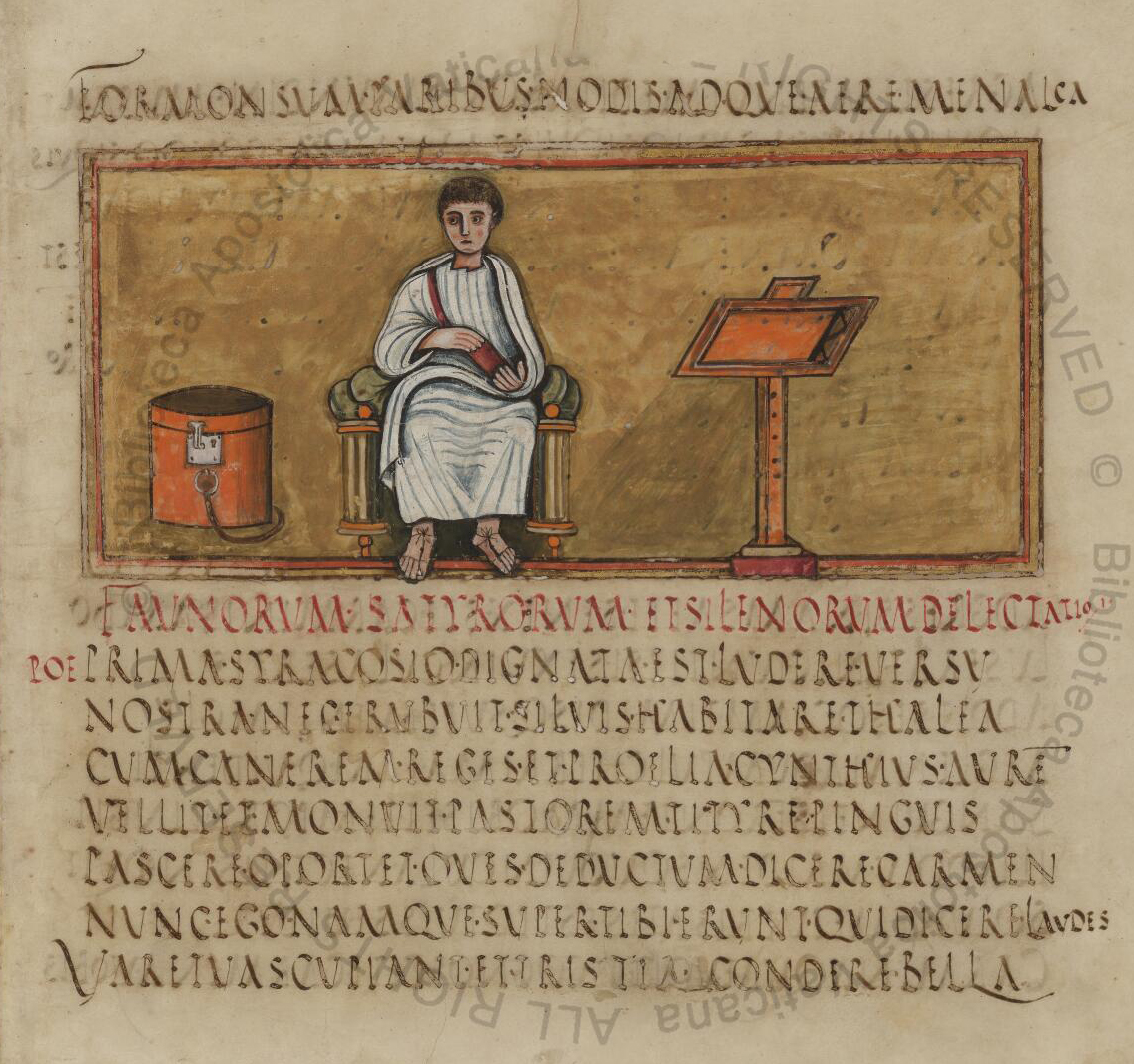
Page 43: "The implication is that this method of reading, this silent perusing of the page, was in his time something out of the ordinary, and that normal reading was performed out loud." I think this is very dense of him to write this. He is writing a book on the history of reading! Shouldn't he know that you had to read Latin out loud because there weren't spaces? This irritates me.
Page 48: I am going mad with how he is slowly writing about the way people read aloud and why. He could have said it, and been done with it.
THE BOOK OF MEMORY
Page 58: The King of Egypt says that if people learn to read, "they will cease to exercise memory because they will rely on that which is written." I love that this is in here because we still say this of knew things. People say that we don't have to remember anything because we can just Google it, and if we forget, well, Google it again! "A reader, Socrates admonished Phaedrus, 'must be singularly simple-minded to believe that written words can do anything more than remind one what one already knows.'" I want to use this in a debate on Google right now!
LEARNING TO READ
THE MISSING FIRST PAGE
Page 86: Manguel personifies books, saying, "The books on my shelves do not know me until I open them, yet I am certain that they address me--me and every other reader--by name; they await our comments and opinions." I like that he mentions this, because I feel like a good book is alive, sitting on the shelf calling softly to everyone just waiting to tell its story. I never really think about the book having a plot when I start it. The book comes to life as I turn the page, and the end isn't written until I have read it.
PICTURE READING
I mostly just listened to what the book was saying in this chapter, however, it did make me think of a time I wanted to read a story before I knew how to read. I pulled out a large book full of children's stories, and opened it up to a random page in the middle. I had never tried to read a story on my own, and thought I could do it after listening to my mom read to me. I had opened up to "The Ugly Duckling," but did not know this at the time. I remember crying because I couldn't figure out what the pictures were saying, and thinking years later that there were no words, only pictures to the story.
BEING READ TO
When he talks of his lover, I automatically halt my thought pattern because that is never written about in text books! I think it should be more common. Everyone needs a little more love, and it kind of makes me want to giggle. Maybe I'm just being silly.
I don't care for being read to because it is hard to concentrate, and I never really have as good of an experience as I would if I read it myself. The only exception I can think of is hearing Shel Silverstein read his own poetry.
Thursday, August 20, 2009
About Me
HEY! My name is Kim!
I'm 22 and a Junior majoring in English. When I first started at KSU I was majoring in Computer Science but soon switched to Programming which was a terrible mistake. I cannot stand Programming! I am majoring in English because I hope to write Young Adult novels. I write stories for myself that I seem to never finish. I spend most of my time reading, watching youtube videos, and trying to fix my nintendo from the 80's.
I don't really know what I'm supposed to say here, actually. I feel weird talking about myself. What am I supposed to say? I'm mostly really funny half the time, and am a really big nerd, but still made of awesome? I guess that's pretty much me. Oh, and I have a dog named Koko Mo but I call him stinky...because he's a dog...and most of the time he stinks. But he dances for treats, so we keep him around.
I'm also a big fan of Dr. Who.
I'm 22 and a Junior majoring in English. When I first started at KSU I was majoring in Computer Science but soon switched to Programming which was a terrible mistake. I cannot stand Programming! I am majoring in English because I hope to write Young Adult novels. I write stories for myself that I seem to never finish. I spend most of my time reading, watching youtube videos, and trying to fix my nintendo from the 80's.
I don't really know what I'm supposed to say here, actually. I feel weird talking about myself. What am I supposed to say? I'm mostly really funny half the time, and am a really big nerd, but still made of awesome? I guess that's pretty much me. Oh, and I have a dog named Koko Mo but I call him stinky...because he's a dog...and most of the time he stinks. But he dances for treats, so we keep him around.
I'm also a big fan of Dr. Who.
Subscribe to:
Posts (Atom)